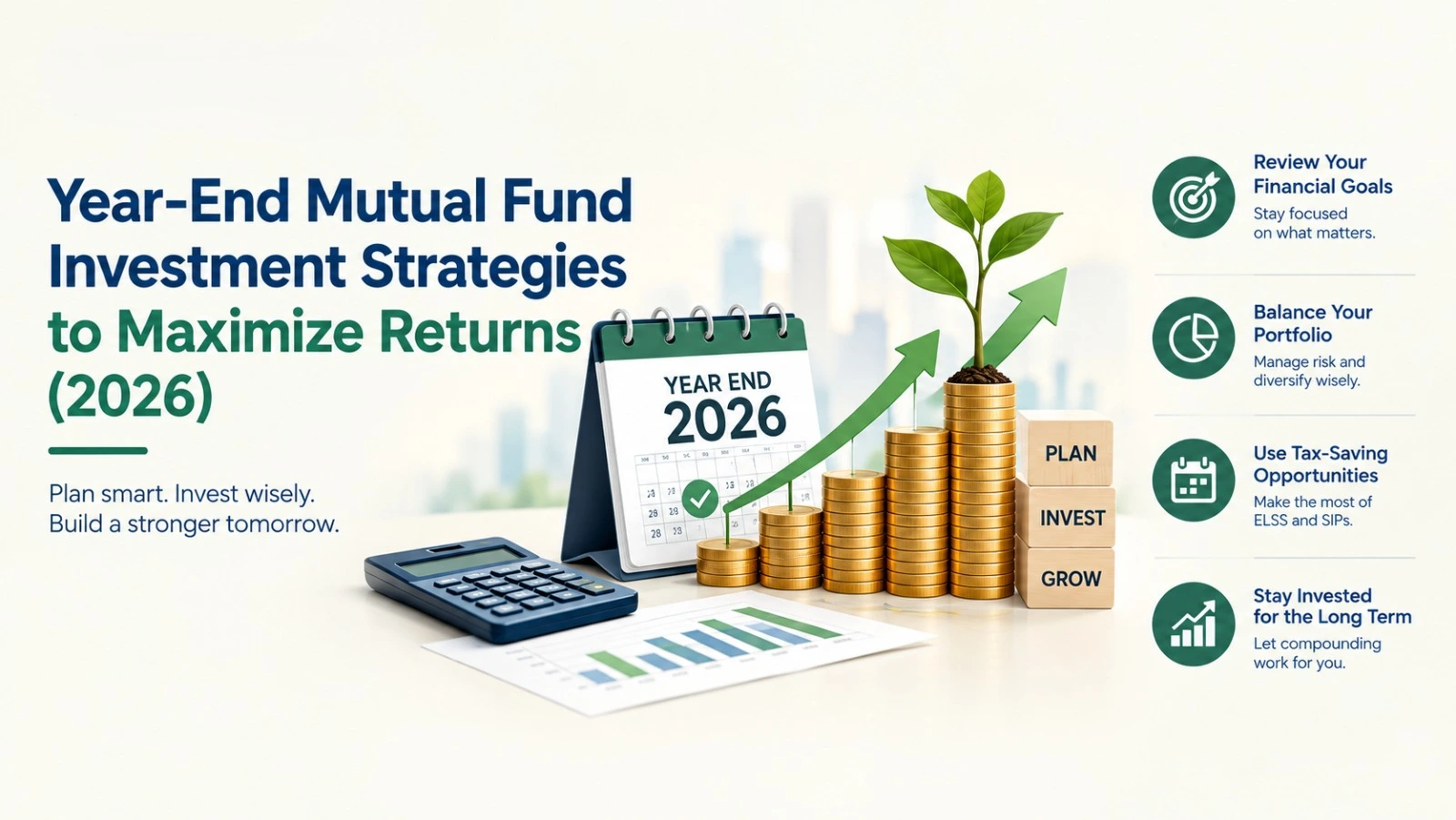
Year-End Mutual Fund Investment Strategies to Maximize Returns (2026)
Year-End Mutual Fund Investment Strategies to Maximize Returns
The end of the financial year is the perfect time to review your investments and prepare your portfolio for the future. Whether you're a beginner or an experienced investor, evaluating your mutual fund investments annually can help improve returns, reduce unnecessary risks, and optimize tax savings.
Instead of waiting for the new year to make financial resolutions, use the year-end to strengthen your investment strategy and stay aligned with your long-term financial goals.
Here's how you can make the most of your mutual fund investments before the year ends.
Why Year-End Portfolio Review Is Important
Markets change continuously, and so do your financial goals.
A portfolio that suited your needs a year ago may no longer match your current risk profile or future objectives.
A yearly review helps you:
- Identify underperforming funds
- Improve portfolio diversification
- Reduce unnecessary risks
- Maximize tax benefits
- Align investments with your financial goals
Regular portfolio reviews are one of the most effective habits successful investors follow.
1. Review Your Mutual Fund Portfolio
Start by analyzing the performance of every mutual fund you own.
Ask yourself:
- Has the fund consistently outperformed its benchmark?
- Is it still suitable for my financial goals?
- Has the fund manager maintained consistent performance?
- Has my asset allocation changed significantly?
If a fund has consistently underperformed over multiple years despite favorable market conditions, consider replacing it with a better-performing alternative after evaluating exit loads and tax implications.
2. Rebalance Your Portfolio
Market movements often change your portfolio allocation.
For example:
If equity markets performed exceptionally well during the year, your portfolio may now have a much higher equity allocation than originally planned.
Rebalancing helps restore your desired asset allocation by shifting investments between:
- Equity Funds
- Debt Funds
- Hybrid Funds
- Gold Funds (if part of your strategy)
Portfolio rebalancing helps manage risk while maintaining long-term investment discipline.
3. Maximize Tax Savings with ELSS Funds
If you haven't fully utilized your tax-saving investments, year-end is an ideal time to consider Equity Linked Savings Schemes (ELSS).
Benefits of ELSS
- Tax deduction under Section 80C (subject to prevailing tax rules)
- Only a 3-year lock-in period
- Potential for long-term wealth creation
- Professionally managed equity portfolio
Instead of making last-minute tax-saving investments without planning, choose ELSS funds that align with your overall investment strategy.
4. Increase Your SIP Contributions
As your income grows, your investments should grow too.
A simple way to accelerate wealth creation is by increasing your SIP amount every year.
For example:
If you currently invest ₹5,000 per month, increasing it by just 10% annually can significantly increase your long-term corpus because of compounding.
Many fund houses also offer a Step-Up SIP feature that automatically increases your monthly investment.
5. Take Advantage of Market Opportunities
Year-end often brings increased market volatility due to:
- Corporate earnings announcements
- Global economic events
- RBI policy decisions
- Foreign investment flows
- Fiscal policy changes
Rather than fearing market corrections, long-term investors can use them as opportunities to accumulate quality mutual funds through SIPs or well-planned lump sum investments.
Avoid trying to time the market perfectly. Consistency usually delivers better long-term results.
6. Diversify Your Investments
Diversification reduces the overall risk of your portfolio.
Instead of investing only in one category, consider spreading your investments across:
- Large Cap Funds
- Flexi Cap Funds
- Mid Cap Funds
- Hybrid Funds
- Debt Funds
- International Funds (where suitable)
A diversified portfolio performs more consistently across different market cycles.
7. Revisit Your Financial Goals
Your investment strategy should evolve with your life.
Review goals such as:
- Buying a home
- Children's education
- Retirement planning
- Emergency fund
- Wealth creation
- International travel
Once your priorities change, your mutual fund allocation should change accordingly.
Goal-based investing keeps your financial service organized and disciplined.
8. Review Expense Ratios and Exit Loads
Small costs can significantly affect long-term returns.
Before switching or investing, review:
Expense Ratio
Lower expense ratios generally help investors retain more returns over the long term.
Exit Load
Some mutual funds charge an exit load if redeemed before a specified period.
Understanding these charges can prevent unnecessary costs.
9. Stay Updated with Market Trends
Economic conditions continue to evolve.
Regularly monitor:
- RBI monetary policy
- Inflation trends
- Interest rate changes
- Union Budget announcements
- SEBI regulatory updates
- Global market developments
Staying informed helps you make better investment decisions without reacting emotionally to short-term market movements.
10. Create an Investment Plan for the New Year
End the year with a clear financial roadmap.
Consider:
- Increasing monthly SIPs
- Starting a retirement SIP
- Building an emergency fund
- Investing for children's future
- Improving portfolio diversification
- Reviewing insurance coverage
- Tracking investment performance quarterly
Small improvements every year can create substantial wealth over the long term.
Year-End Investment Checklist
Before the year ends, make sure you have:
Reviewed your portfolio
Rebalanced your asset allocation
Maximized tax-saving investments
Increased your SIP amount
Updated your financial goals
Checked expense ratios
Reviewed exit loads
Planned investments for next year
Common Mistakes to Avoid
- Waiting until the last day for tax-saving investments
- Chasing last year's best-performing fund
- Ignoring portfolio reviews
- Stopping SIPs during market corrections
- Investing without clear financial goals
- Overlooking fund expenses and taxation
Avoiding these mistakes can improve your investment outcomes over time.
Conclusion
Year-end isn't just about reviewing returns—it's about preparing for the future.
A disciplined approach that includes portfolio review, rebalancing, tax planning, increasing SIPs, and aligning investments with your financial goals can significantly improve your long-term wealth creation journey.
Mutual funds remain one of the most effective investment options for building wealth, but success comes from consistent investing and regular portfolio reviews—not from trying to predict the market.
If you're unsure whether your portfolio is aligned with your financial goals, consulting a qualified financial advisor can help you make informed investment decisions.
Frequently Asked Questions (FAQs)
1. What is the best mutual fund investment strategy at the end of the year?
Review your portfolio, rebalance your asset allocation, maximize tax-saving investments through ELSS (if applicable), increase your SIP contributions, and ensure your investments remain aligned with your financial goals.
2. Should I increase my SIP every year?
Yes. Increasing your SIP annually—especially when your income rises—can significantly boost your long-term investment corpus through the power of compounding.
3. Is year-end a good time to make lump sum investments?
If you have surplus funds and a long-term investment horizon, year-end can be an appropriate time for lump sum investments. However, avoid timing the market solely based on short-term movements. A disciplined investment strategy is generally more effective.
4. Why is portfolio rebalancing important?
Portfolio rebalancing restores your desired asset allocation, helps manage risk, and ensures your investments remain aligned with your financial objectives despite market fluctuations.
5. How often should I review my mutual fund portfolio?
A comprehensive review at least once a year is recommended. You may also review your portfolio after major life events or significant market changes to ensure it continues to meet your financial goals.