RBI Repo Rate Hike 2026: Impact on Investors & SIPs
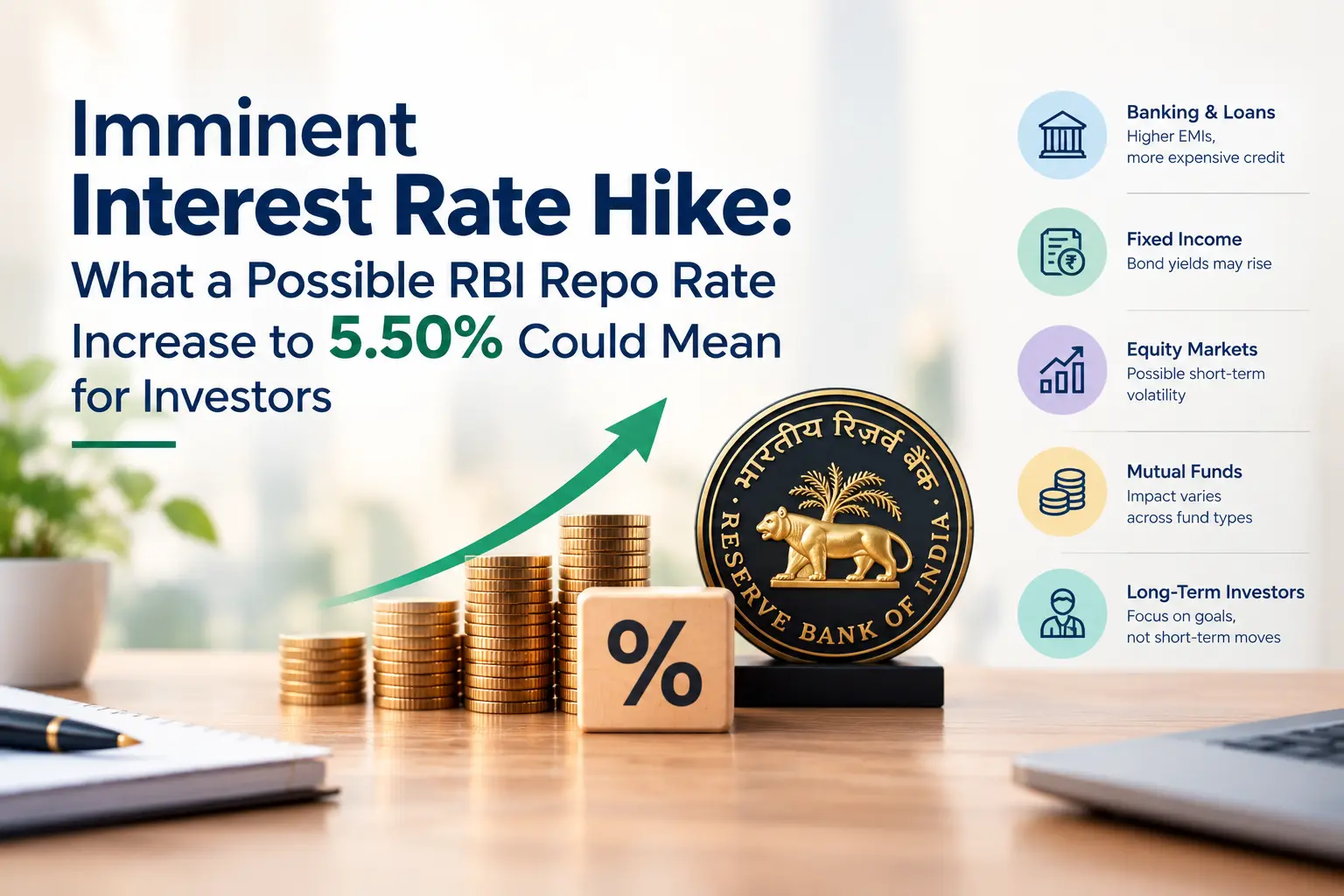
Imminent Interest Rate Hike: What a Possible RBI Repo Rate Increase to 5.50% Could Mean for Investors
The Reserve Bank of India (RBI) is preparing for a significant Monetary Policy Committee (MPC) meeting on Wednesday, October 7, 2026, which has attracted considerable market attention. The central bank is anticipated to raise the repo rate by 25 basis points, moving it from its present level of 5.25% to 5.50%. The policy announcement will be delivered at 10:00 AM IST, with a subsequent press conference by the Governor.
Should this increase materialize, it would represent the first repo rate elevation since February 2023. This action would signify a notable transition following the RBI's reduction of the repo rate by 125 basis points cumulatively throughout 2025 and its subsequent maintenance at 5.25% during recent policy assessments.
However, what factors have brought the possibility of a rate increase back into consideration and what implications might this hold for individual investors?
What Factors Support the RBI's Expected Rate Increase?
The RBI's fundamental mandate encompasses maintaining price stability while simultaneously supporting economic growth objectives. When inflationary pressures intensify, elevating the repo rate serves as a critical instrument to prevent inflation from becoming persistent within the economy.
Recent economic indicators have intensified scrutiny regarding inflation dynamics. India's retail inflation reached 4.82% in August, persisting above the RBI's 4% long term target for the third consecutive month. Concurrently, elevated crude oil prices, heightened international bond yields and depreciation pressures on the rupee have compounded economic uncertainty.
The international interest rate landscape also warrants consideration. When prominent central banks implement tightening measures, emerging economies including India must evaluate potential consequences for capital inflows, currency valuations and overall financial stability.
Accordingly, the anticipated 25 basis point adjustment should be comprehended within the context of a comprehensive inflation and international market framework rather than as an independent modification to the repo rate.
What Are the Consequences of Repo Rate Increases?
The repo rate represents the interest rate at which the RBI extends credit to commercial banks in exchange for eligible collateral. When the policy rate increases, credit conditions throughout the financial system progressively become more restrictive.
For borrowers, this development could result in elevated interest expenses, particularly for loans indexed to variable or external reference rates. Mortgages, personal loans and other credit facilities may consequently become costlier, contingent upon the manner in which financial institutions implement the policy adjustment.
For savers, the situation may present a contrasting perspective. Financial institutions may possess stronger motivation to enhance deposit rates as they seek to attract capital. Fixed deposit holders and other fixed income savers might therefore potentially gain from improved rates in the future.
What Could It Mean for Mutual Fund Investors?
An interest rate increase does not necessarily indicate that investors should divest from equity mutual funds or discontinue their systematic investment plans.
Equity markets may respond to interest rate modifications because elevated borrowing costs can affect corporate earnings, consumer expenditure and organizational capital allocation.
Nevertheless, market outcomes are influenced by numerous variables, encompassing profitability, asset valuations, international markets, capital availability, economic expansion and market psychology.
Debt mutual funds may similarly experience effects from interest rate fluctuations. Typically, when market yields increase, prevailing bond valuations may encounter downward pressure, though the magnitude of impact depends on the fund's maturity profile, asset composition and supplementary considerations.
Consequently, investors should refrain from making determinations predicated exclusively on a solitary monetary policy committee announcement.
What About SIP Investors?
For an investor pursuing a long term systematic investment plan, a 25-basis-point interest rate elevation should not necessarily necessitate a modification to the investment approach.
A systematic investment plan functions to allocate capital at regular intervals rather than rely on forecasting precise market positions. Market valuations can fluctuate in accordance with shifting projections and interest rate determinations represent merely one among numerous influences on market dynamics.
Rather than questioning, "Should I discontinue my systematic investment plan due to rising rates?", investors may discover it more advantageous to contemplate:
What constitutes my investment objective?
What duration does my investment timeline encompass?
Is my present portfolio distribution suitable?
Has my economic circumstances evolved?
Does my investment portfolio continue to correspond with my risk tolerance?
A market event may serve as an appropriate occasion to reassess a portfolio; however, it should not precipitate hasty or ill-considered actions.
The Broader Consideration: What Will the RBI Communicate Next?
Notably, the magnitude of the rate adjustment may not represent the sole focus of market participants on October 7. The RBI's statements and prospective guidance hold comparable significance.
A 25 basis point increase coupled with measured communication could indicate that the RBI is addressing immediate inflationary concerns without pledging to an extended tightening program.
Conversely, more assertive language regarding inflation, petroleum prices, international interest rates or exchange rate challenges could prompt markets to anticipate additional restrictive measures.
Existing market analyses predominantly support a 25 basis point increase, though certain economists have proposed the possibility of a more substantial adjustment.
What Actions Should Investors Consider?
Investors ought to refrain from attempting to forecast every transient market fluctuation. Rather, the present moment represents an opportune time to evaluate portfolio fundamentals.
Assess whether your holdings maintain appropriate diversification, whether your objectives and investment horizons have shifted and whether your portfolio has developed excessive concentration in any particular asset category or industry segment.
Investors carrying substantial liabilities should similarly examine their financing expenses and ascertain whether their obligations are contingent upon variable interest rates.
For those invested in mutual funds, a regular portfolio evaluation conducted with a certified financial advisor can facilitate determination of whether the current approach remains aligned with the investor's objectives and risk tolerance.
Final Remarks
The RBI's October 7 policy decision receives considerable market scrutiny, with a 25 basis point repo rate increase to 5.50% representing the prevailing consensus expectation.
Nevertheless, investors should recognize that monetary policy constitutes merely one component of the comprehensive financial landscape. Inflationary pressures, economic expansion, business profitability, international financial markets, exchange rate dynamics and asset valuations will persist in shaping investment outcomes.
Whether the RBI hikes rates by 25 basis points, surprises the market with a different move or changes its forward guidance, the most important lesson for investors remains the same: don't let one policy announcement dictate a long term investment strategy.
A disciplined portfolio, clear financial goals and periodic review can be more valuable than trying to predict the next market move.
Frequently Asked Questions (FAQs)
1. What is the expected RBI repo rate after the October 2026 MPC meeting?
The current repo rate is 5.25%. Most recent economist surveys expect a 25 basis point increase to 5.50% on October 7, 2026. However, the final decision rests with the MPC and should not be treated as confirmed until the RBI announces it.
2. Will a repo rate hike affect mutual funds?
It can, but the impact varies by category. Equity funds may be affected indirectly through borrowing costs, earnings and market valuations, while debt funds can be affected by changes in bond yields and prices. The effect depends on the fund's portfolio and duration, so investors should not make decisions based solely on the repo rate announcement.
3. Should investors stop their SIPs if the RBI increases the repo rate?
Not necessarily. A repo rate hike by itself is not a sufficient reason to stop a long term SIP. Investors should consider their goals, time horizon, risk profile and overall asset allocation before making changes. A portfolio review can be more useful than reacting emotionally to a single policy event.