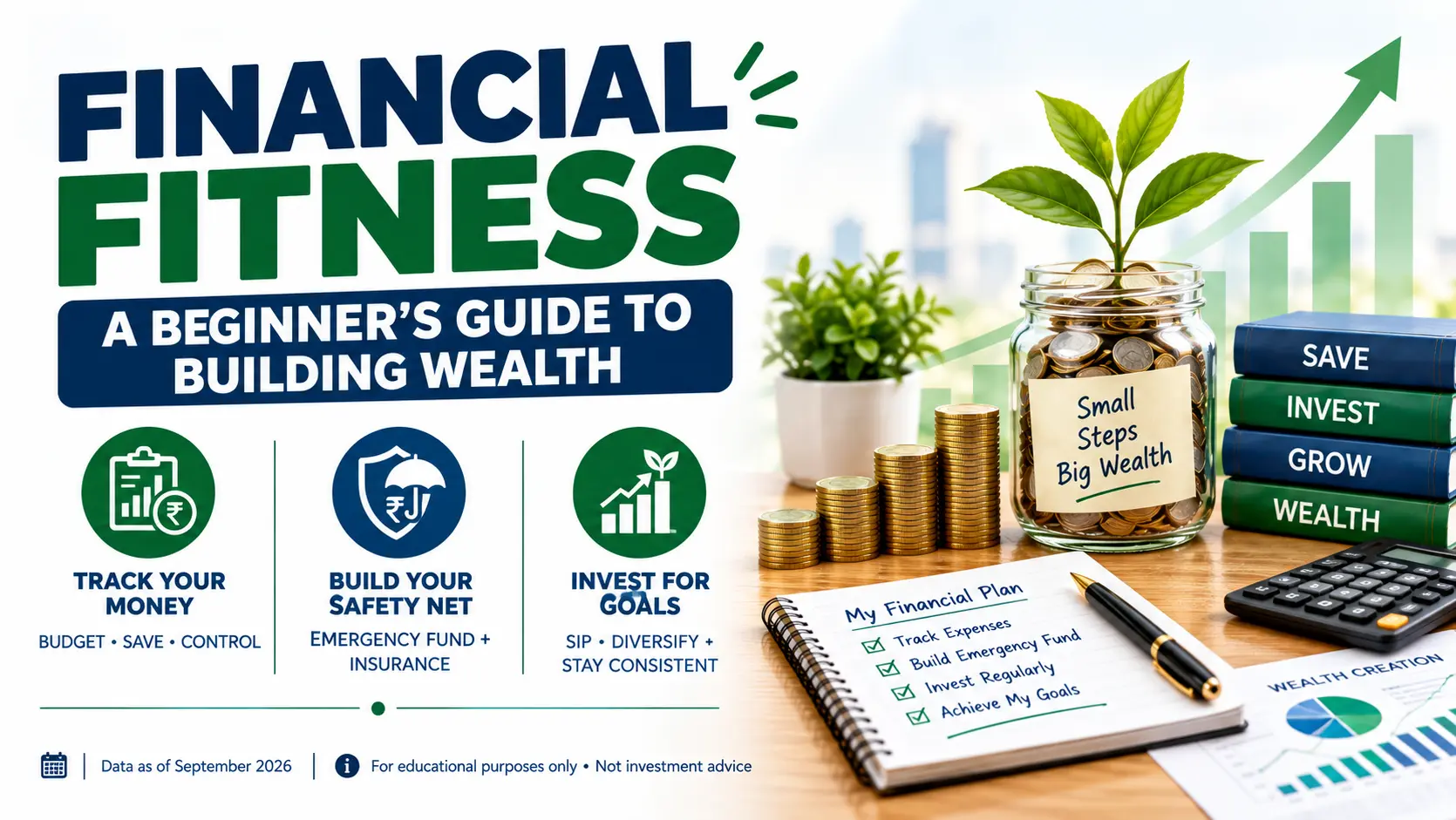
Financial Fitness: A Beginner’s Guide to Building Wealth
Financial Fitness: A Beginner’s Guide to Building Wealth
Whether you're just beginning your career or have a few years of work experience, building financial stability is one of the most valuable steps you can take. While personal finance may seem complicated at first, developing the right habits early can help you achieve long term financial security and independence.
This guide covers the essential steps to improve your financial fitness and start building wealth with confidence.
Set Clear Financial Goals
Every successful financial journey begins with a clear objective. Before you start saving or investing, identify what you want to achieve.
Common financial goals include:
- Building an emergency fund
- Buying a home
- Planning for retirement
- Funding your child's education
- Starting a business
- Creating long term wealth
Separate your goals into short term, medium term and long term categories. Having defined goals makes it easier to plan your finances and stay motivated.
Create a Monthly Budget
A budget is the foundation of sound financial management. It helps you understand where your money is going and ensures you're spending within your means.
Start by listing:
- Monthly income
- Fixed expenses (rent, EMIs, insurance)
- Variable expenses (food, travel, shopping)
- Savings and investments
Review your spending regularly and identify areas where unnecessary expenses can be reduced. A well planned budget should always include a dedicated portion for savings and investments.
Build an Emergency Fund
Unexpected situations such as medical emergencies, job loss, or urgent repairs can disrupt your finances. An emergency fund provides a financial cushion during such events.
Ideally, maintain savings equal to 3-6 months of your monthly expenses in a liquid and easily accessible account.
This fund should only be used for genuine emergencies.
Manage Debt Wisely
Debt is not always bad, but unmanaged debt can slow down your financial progress.
Begin by:
- Listing all outstanding loans and credit card balances.
- Prioritizing repayment of high interest debt.
- Paying EMIs on time to maintain a healthy credit score.
- Avoiding unnecessary borrowing.
Reducing debt frees up more money for savings and investments.
Start Investing Early
Saving alone may not be enough to beat inflation. Investing helps your money grow over time through the power of compounding.
Before investing, understand:
- Your financial goals
- Risk tolerance
- Investment time horizon
For beginners, diversified investment options such as mutual funds, index funds and Exchange Traded Funds (ETFs) can be a good starting point.
Investment Tips
- Start investing as early as possible.
- Invest consistently rather than waiting for the "perfect" time.
- Diversify across different asset classes.
- Increase your investments as your income grows.
- Review your portfolio periodically.
Maintain Financial Discipline
Building wealth is a long term process that requires consistency.
Develop habits such as:
- Saving before spending.
- Tracking your expenses.
- Avoiding lifestyle inflation.
- Continuing to improve your financial knowledge.
- Reviewing financial goals every year.
Small, disciplined actions taken consistently often produce better results than occasional large investments.
Common Mistakes to Avoid
Many beginners delay wealth creation because of avoidable mistakes.
Some common ones include:
- Delaying investments
- Not having an emergency fund
- Depending heavily on credit cards
- Ignoring inflation while planning
- Investing without understanding the product
- Frequently changing investment strategies based on market movements
Avoiding these mistakes can significantly improve your long term financial outcomes.
Conclusion
Financial fitness is not about earning a very high income it's about managing money wisely and making informed financial decisions. Setting clear goals, following a budget, maintaining an emergency fund, managing debt responsibly and investing consistently are the building blocks of long term wealth.
Remember, wealth is built gradually through disciplined financial habits. The earlier you begin, the greater the benefits of compounding and long term growth.
Frequently Asked Questions (FAQs)
1. What is financial fitness?
Financial fitness refers to maintaining healthy financial habits such as budgeting, saving, investing, managing debt responsibly and planning for future financial goals.
2. How much should I save in an emergency fund?
A good rule of thumb is to maintain an emergency fund covering three to six months of your essential living expenses.
3. Why should I start investing early?
Starting early allows your investments to benefit from compounding, giving your money more time to grow and helping you build wealth over the long term.
4. What are good investment options for beginners?
Beginners often start with mutual funds, index funds, ETFs or Systematic Investment Plans (SIPs), depending on their financial goals and risk appetite.
5. How often should I review my financial plan?
Review your financial plan at least once a year or whenever there is a significant life event, such as a job change, marriage or major financial commitment.
6. Is budgeting necessary even if I have a good income?
Yes. Regardless of income level, budgeting helps control expenses, increase savings and ensure you stay on track to achieve your financial goals.