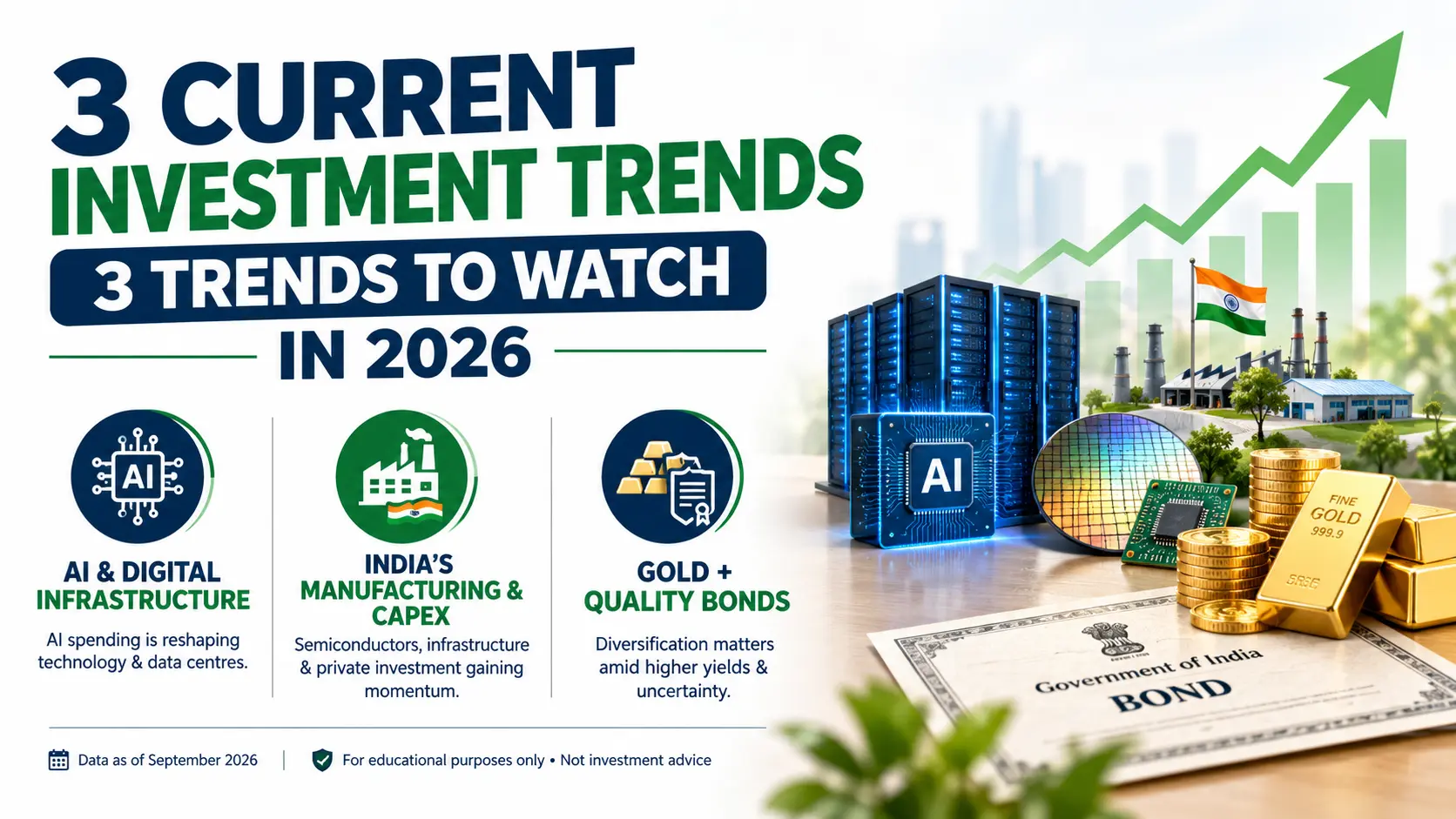
3 Current Investment Trends to Watch in 2026
3 Current Investment Trends to Watch
The investment landscape continues to evolve as technology, economic policies and market dynamics create new opportunities for investors. Understanding emerging trends can help you make informed investment decisions and build a well-diversified portfolio. Here are three major investment trends that deserve attention.
1. Artificial Intelligence (AI)
Artificial Intelligence has become one of the most transformative technologies across industries. From automation and healthcare to finance and manufacturing, AI is driving innovation and creating new business opportunities.
Why AI Matters
Increasing adoption across multiple industries.
Improved productivity and operational efficiency.
Strong long-term growth potential.
Rising demand for AI-driven software and infrastructure.
Investment Opportunities
Investors can gain exposure to AI through:
Technology companies.
AI software developers.
Semiconductor manufacturers.
Cloud computing providers.
AI-focused mutual funds and ETFs.
Things to Consider
AI-related companies may experience higher market volatility.
Valuations in the technology sector can be expensive.
Long-term investment horizons are generally more suitable.
2. Small-Cap Stocks
Small-cap companies are businesses with relatively lower market capitalization compared to large-cap firms. These companies often have significant growth potential, although they may also carry higher investment risk.
Why Small-Cap Stocks Are Attractive
Greater potential for capital appreciation.
Opportunity to invest in emerging businesses.
Faster adaptability to changing market conditions.
Potential beneficiaries of economic expansion.
Sectors Showing Growth Potential
Technology
Healthcare
Renewable Energy
Manufacturing
Consumer Businesses
Risks to Keep in Mind
Higher price volatility.
Lower liquidity compared to large-cap stocks.
Greater sensitivity to economic slowdowns.
3. Higher Interest Rate Environment
Interest rates play a significant role in shaping investment returns across different asset classes. Rising interest rates can impact borrowing costs, corporate earnings, bond prices and overall market sentiment.
Impact on Investors
Better returns on fixed-income investments.
Attractive yields on short-term debt instruments.
Increased borrowing costs for businesses.
Potential pressure on equity valuations.
Investment Opportunities
Investors may consider:
Short-duration debt funds.
High-quality corporate bonds.
Government securities.
Fixed deposits.
Money market instruments.
Key Considerations
Bond prices generally move inversely to interest rates.
Focus on quality fixed-income investments.
Maintain diversification across asset classes.
Building a Balanced Investment Strategy
Rather than concentrating on a single trend, investors should focus on creating a diversified portfolio that aligns with their financial goals and risk tolerance.
A balanced investment approach may include:
Equity investments for long-term wealth creation.
Small-cap exposure for higher growth potential.
Debt investments for stability and income.
International diversification where appropriate.
Periodic portfolio reviews and rebalancing.
Conclusion
Investment trends continue to evolve alongside economic developments and technological innovation. Artificial Intelligence offers long-term growth opportunities, small-cap stocks can provide higher return potential and higher interest rates create attractive opportunities in fixed-income investments. By understanding these trends and maintaining a diversified investment strategy, investors can better position themselves to achieve their long-term financial objectives.
Frequently Asked Questions (FAQs)
1. Why is Artificial Intelligence considered an important investment theme?
AI is transforming industries by improving efficiency, automation and innovation, creating significant long-term growth opportunities for companies operating in this space.
2. Are small-cap stocks suitable for every investor?
Small-cap stocks are generally suitable for investors with a higher risk tolerance and a long-term investment horizon, as they tend to be more volatile than large-cap companies.
3. How do higher interest rates affect investments?
Higher interest rates can increase returns on fixed-income investments while potentially reducing the attractiveness of certain equity investments due to higher borrowing costs and lower corporate profitability.
4. Should investors change their portfolio based on market trends?
Investment decisions should be based on individual financial goals, risk tolerance and investment horizon rather than short-term market trends. Periodic portfolio reviews can help maintain the desired asset allocation.
5. What is the best way to benefit from these investment trends?
A diversified portfolio that includes exposure to equities, debt instruments and emerging growth sectors can help investors participate in long-term opportunities while managing overall investment risk.